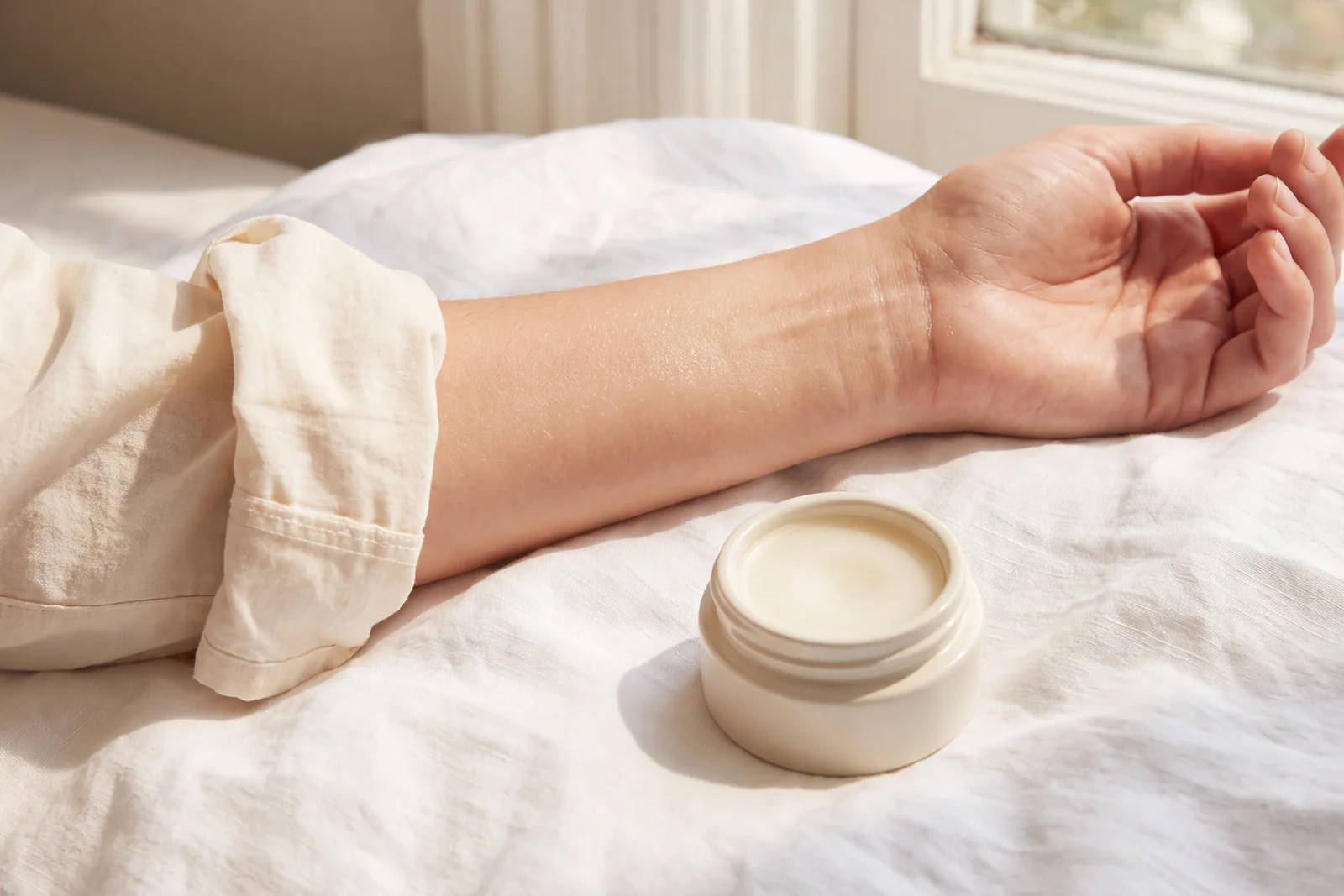
The most common complaint about any perfume is that it disappears. Almost always the fragrance is doing what it was built to do, and the variable is the skin it was put on. A few of the standard pieces of advice work. Several are folklore.
Dry skin is the whole problem
Fragrance molecules need something to hold on to. Skin that is dry gives them very little, and what was sprayed evaporates from the surface almost as fast as it would from glass. Oily skin holds a fragrance for hours longer than dry skin with no other change at all.
This is why the single most effective thing anyone can do costs nothing: apply an unscented moisturiser and spray onto it while it is still slightly damp. Not a scented body lotion, which introduces a second composition that will argue with the first. A plain emollient, or even a trace of jojoba or almond oil on the pulse points.
Where to put it
Warmth pushes a fragrance outward, so the conventional advice to use the pulse points — inner wrists, the side of the neck, the inner elbow — is sound as far as it goes. But warmth also accelerates evaporation. Spraying somewhere cooler and more sheltered, the chest under a shirt or the back of the neck under hair, trades a little of the opening projection for a great deal more time.
Hair holds scent better than skin does, and so does clothing. Wool and cotton will carry a fragrance for a day or more, which is a real advantage and a real hazard: oils can mark pale silk, and the composition on fabric develops differently, without the warmth and chemistry of skin to move it along.
Rubbing your wrists together does not “break” a fragrance. It does warm the skin and speed up the opening, which is a small cost for no benefit.
What does not work
Spraying into the air and walking through it wastes most of the liquid on the floor. Applying more and more in one place rarely helps past a point — skin can only hold so much, and the surplus evaporates without ever having been worn. Storing a bottle in a bathroom, where heat and humidity swing all day, will shorten the life of the liquid long before it shortens the life of any single wearing.
Read the structure first
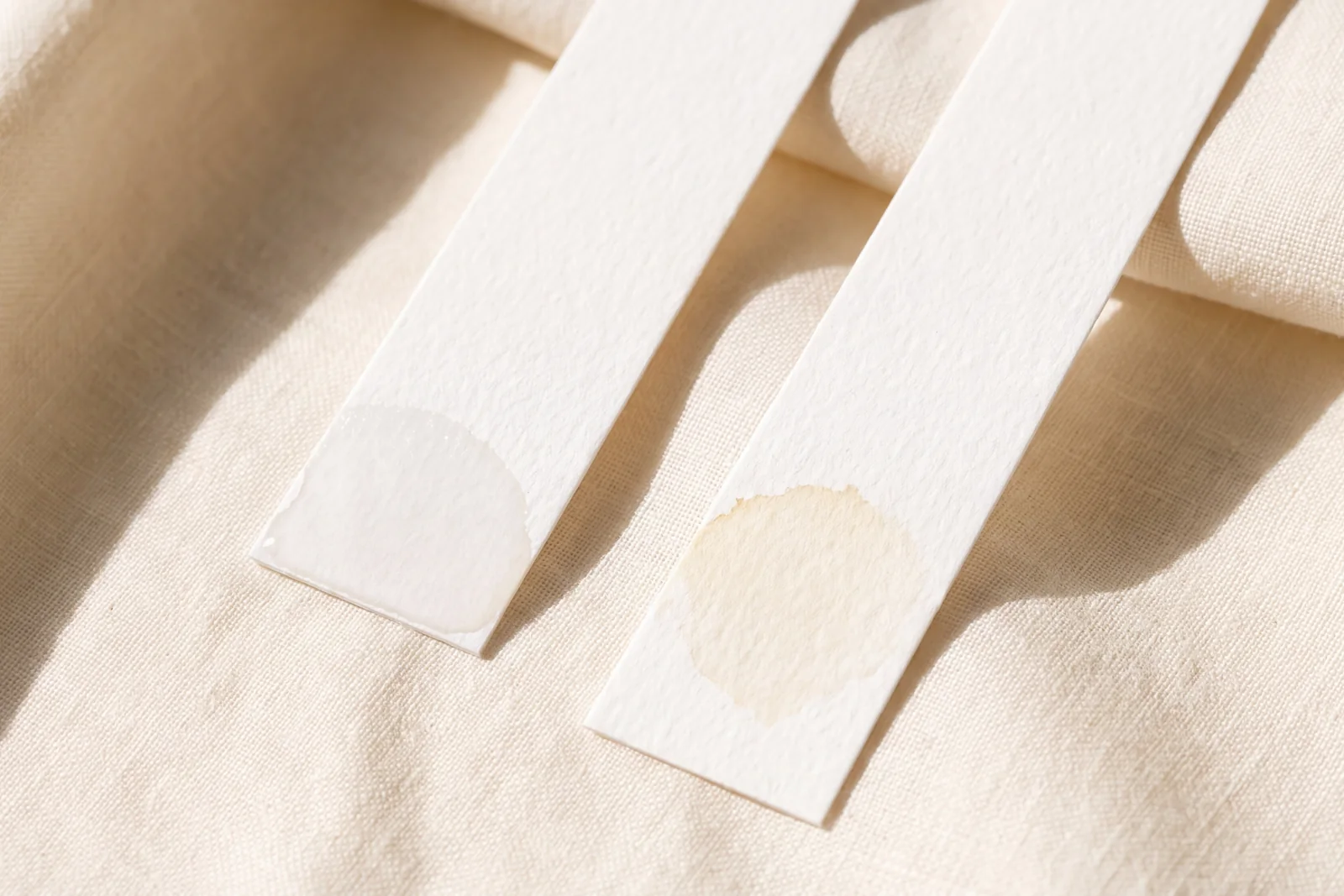
Some fragrances are built to last eight hours and some are not, and this is a choice rather than a failing. Citrus and light aromatic structures are volatile by nature; a bergamot opening that stayed for ten hours would not smell of bergamot. Woods, resins, musks and ambers are heavy, slow molecules and will still be present at the end of a day.
So before deciding a perfume has failed, look at what it is built on. A composition whose base is sandalwood or oud is doing something different from one built on neroli, and expecting the same performance from both is expecting one of them to be a different fragrance.
Every Nagori edition shows a target for its hours on skin, and says how it opens and how it settles — so you can see what it is built on before you judge how long it stays.