A perfume is a solution of volatile organic materials in alcohol, and three ordinary things degrade it: light, heat and air. The place most people keep a bottle supplies all three at once.
The bathroom is the worst room in the house
A bathroom cycles from cool to hot and humid several times a day, every day. Those swings are more damaging than a steady warm temperature would be, because each one drives evaporation and condensation inside the bottle and accelerates the reactions that change a composition.
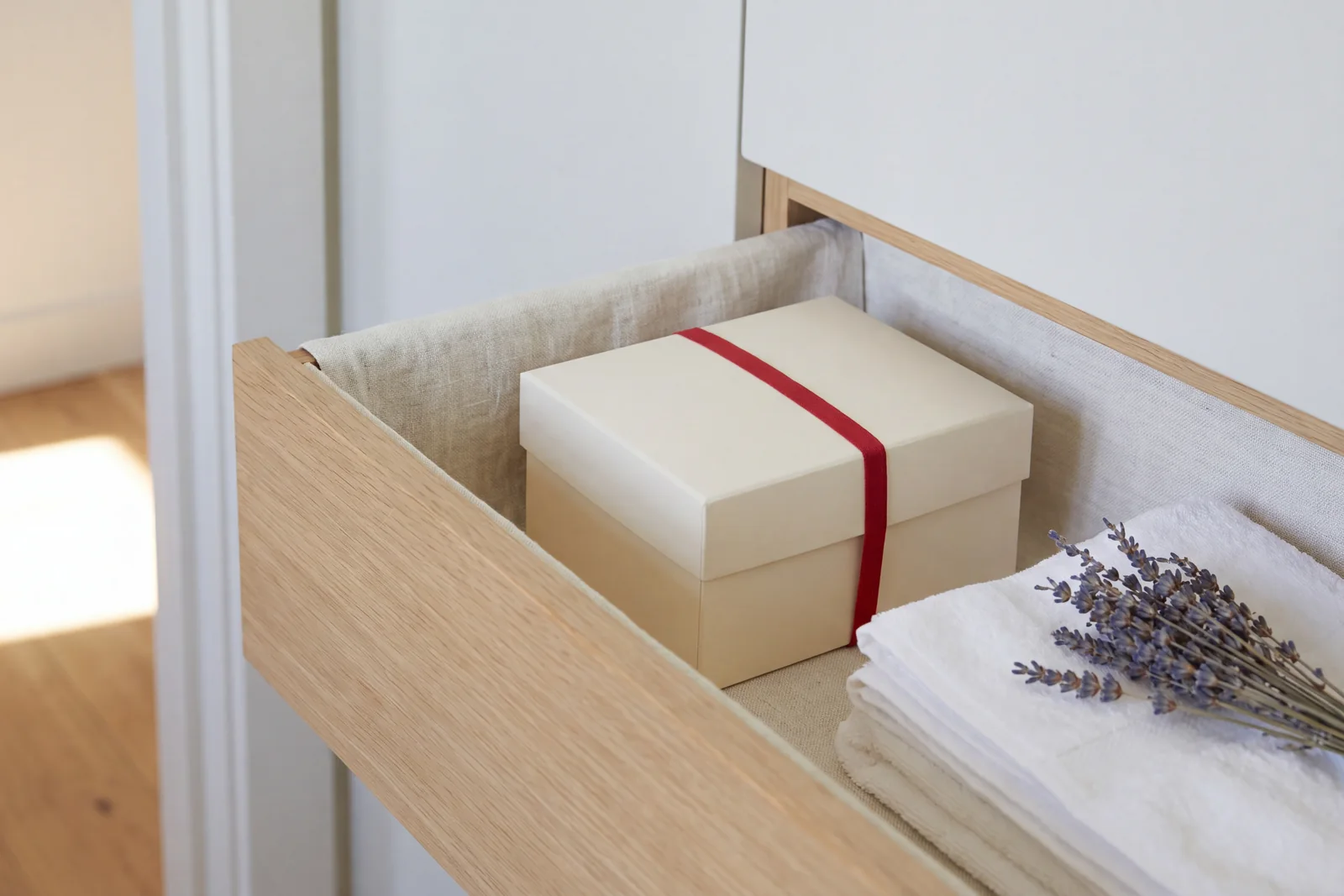
A bedroom drawer, a cupboard, or the original carton on a shelf away from a window — any of these will add years. Cool, dark, and above all steady.
Light does the visible damage
Ultraviolet light breaks down fragrance molecules directly, and citrus materials go first. This is why so many houses use tinted, frosted or coated glass, and why the carton is not merely packaging — it is the bottle’s dark room. Keeping a bottle on a sunlit windowsill because it looks well there is the most expensive decorating decision in the house.
Colour change is the usual sign. A pale juice turning amber, or an amber one turning brown, means oxidation is under way. It does not always mean the fragrance is ruined, but it does mean it is no longer what it was.
The carton is not packaging. It is the dark room the bottle lives in.
Air, and the half-empty bottle
Every spray replaces liquid with air, so a bottle that is three-quarters gone is mostly oxygen. Oxidation accelerates from that point, which is why the last quarter of a bottle often smells subtly different from the first — flatter at the top, heavier underneath.
There is not much to be done about this beyond using a bottle rather than saving it. A fragrance kept for a special occasion for six years is a fragrance that will not be what it was when the occasion arrives. Atomisers also beat splash bottles for exactly this reason: a sealed spray mechanism admits far less air than an open neck and a fingertip.
How long is a bottle good for
Stored properly and unopened, three to five years is a reasonable expectation, and many compositions comfortably exceed it. In use, two to three years is realistic. Heavier structures — woods, resins, ambers, oud — are more stable and can improve slightly with age. Light citrus and delicate florals are the first to go and rarely reward being kept.
Never freeze a bottle. Refrigeration is sometimes suggested and is not harmful, but a steady dark cupboard achieves nearly the same result without the condensation risk every time the bottle comes out.
A Nagori flask arrives in a paper sleeve whose band is dated by hand, so the age of what you own is a fact you can look up rather than guess. Keep the sleeve: it is the flask’s dark room.