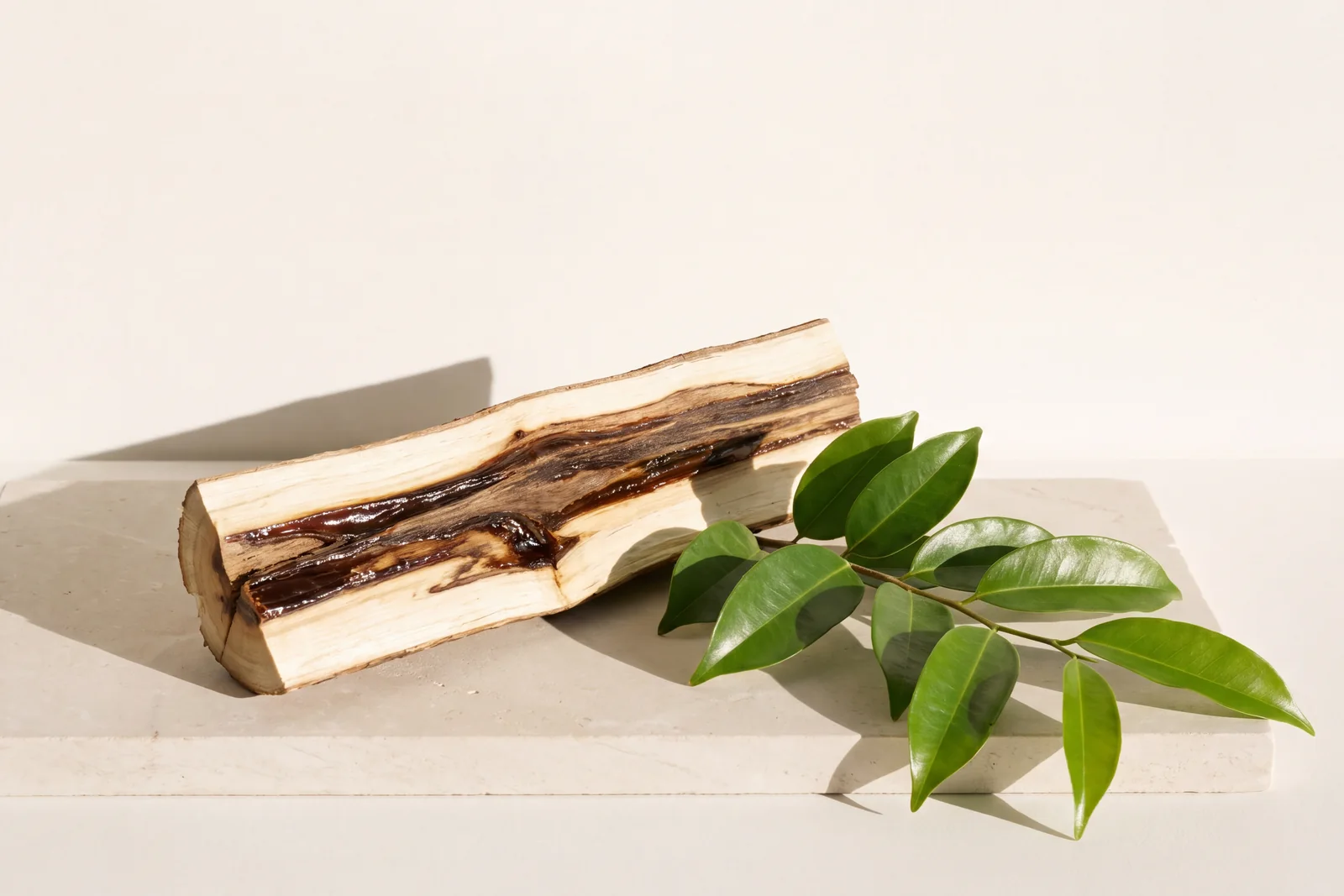
There is a category of perfumery called oud. The tree behind it does nothing remarkable until it is injured, and most of what is sold under its name never came from a tree at all.
Aquilaria agallocha is an unremarkable evergreen until it is wounded. When the tree is infected by a particular mould, it defends itself by saturating the affected heartwood with a dark, dense resin. That resin is agarwood. Distilled, it becomes oud — the most expensive raw material in perfumery by weight, and one of the oldest. The Assamese variety, what the trade calls Hindi oud, is widely held by serious perfumers to be the most layered of all: less brashly animalic than the Gulf material, more medicinal in the fine sense, quieter and more dignified as it dries.
Why it costs what it does
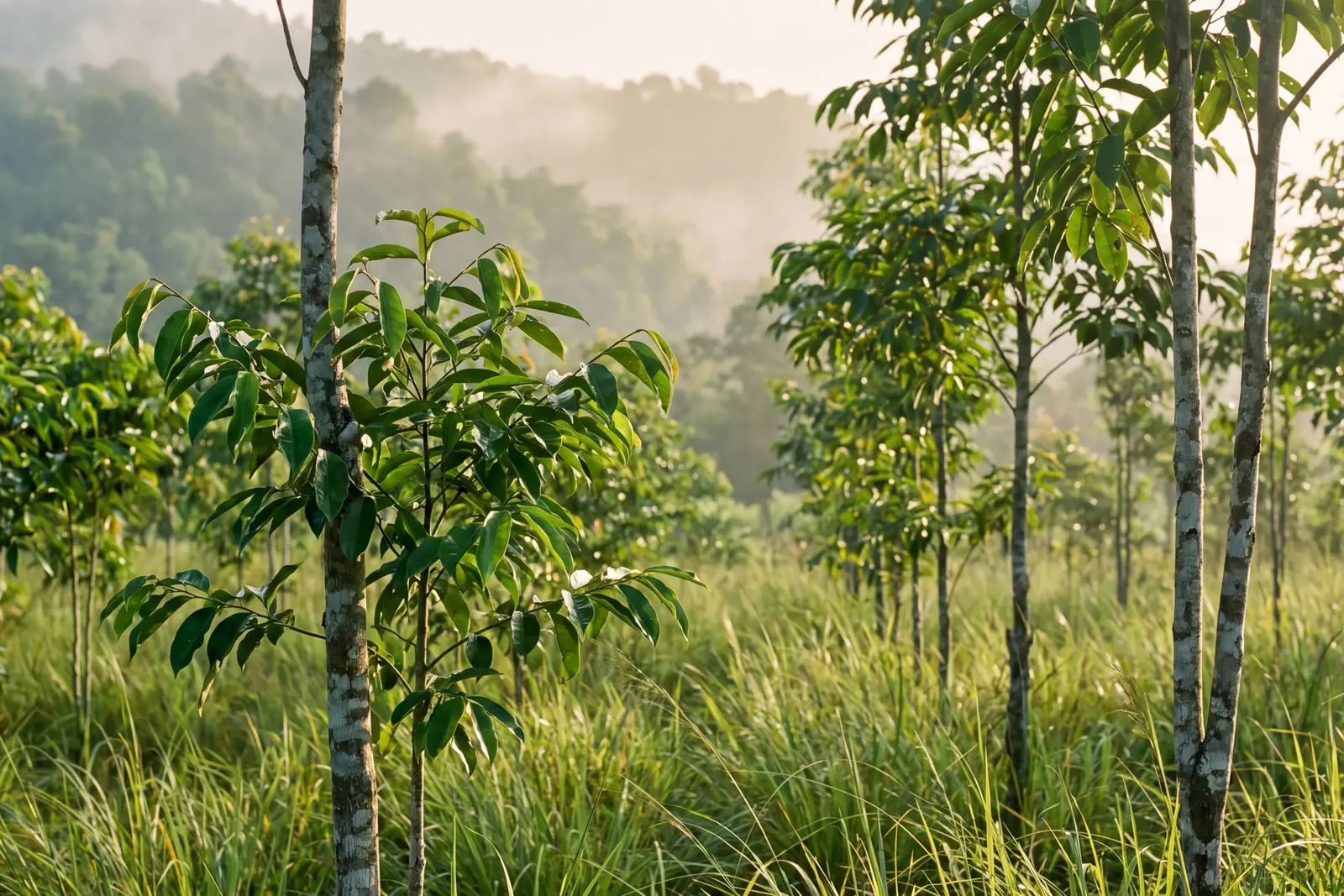
Wild Aquilaria is now listed under CITES, and most legitimate oud comes from plantation trees inoculated on purpose and left for years. Yield is low and variable, which is why the oil is priced by the tola and why a single reformulation can move a composition by more than a customer expects.
The tree makes the resin only where it has been wounded.
Most oud sold in fragrance is not oud. It is a reconstruction built from a handful of aroma chemicals, and it is a reasonable thing to make: it is stable, it is repeatable, and it does not depend on a wounded tree. It also smells like a decision rather than a material. The honest thing is to say which one is in the bottle.
Oud in this house
Burning Slow, the house signature, settles into aged oud beneath cold stone, dark woods and resin — oud as what is left after the fire, not as an announcement. Whether that oud is a distillate, a reconstruction or both is stated with the full ingredient list on its page before the first bottle ships.
The resin only forms where the tree has been damaged. That is the whole of the material.