
A fragrance is not finished when it is mixed. It is finished when it has rested. Between those two moments sit weeks in which nothing appears to happen — and everything does.
Maceration is the quiet, unglamorous heart of fine perfumery, and it is the first thing a brand under pressure abandons. When a scent goes viral and orders outrun stock, the temptation is to mix a batch on Monday and ship it on Friday. The bottle that arrives is technically the right formula. It is also wrong — sharp at the top, thin in the middle, all alcohol and no marriage. Enthusiasts have a word for it: green.
What the wait actually does
Freshly blended, a fragrance is a crowd of molecules that have not yet learned to live together. The alcohol is loud. The fixatives have not yet bonded to the lighter aromatics they are meant to anchor. Left to rest in sealed steel, away from light and heat, the composition integrates: the alcohol bite softens, the heavy base molecules lock onto the volatile top notes and slow their escape, and the accord settles into the single rounded thing the perfumer actually designed. The difference between week one and the weeks after is not subtle. It is the difference between a sketch and a painting.
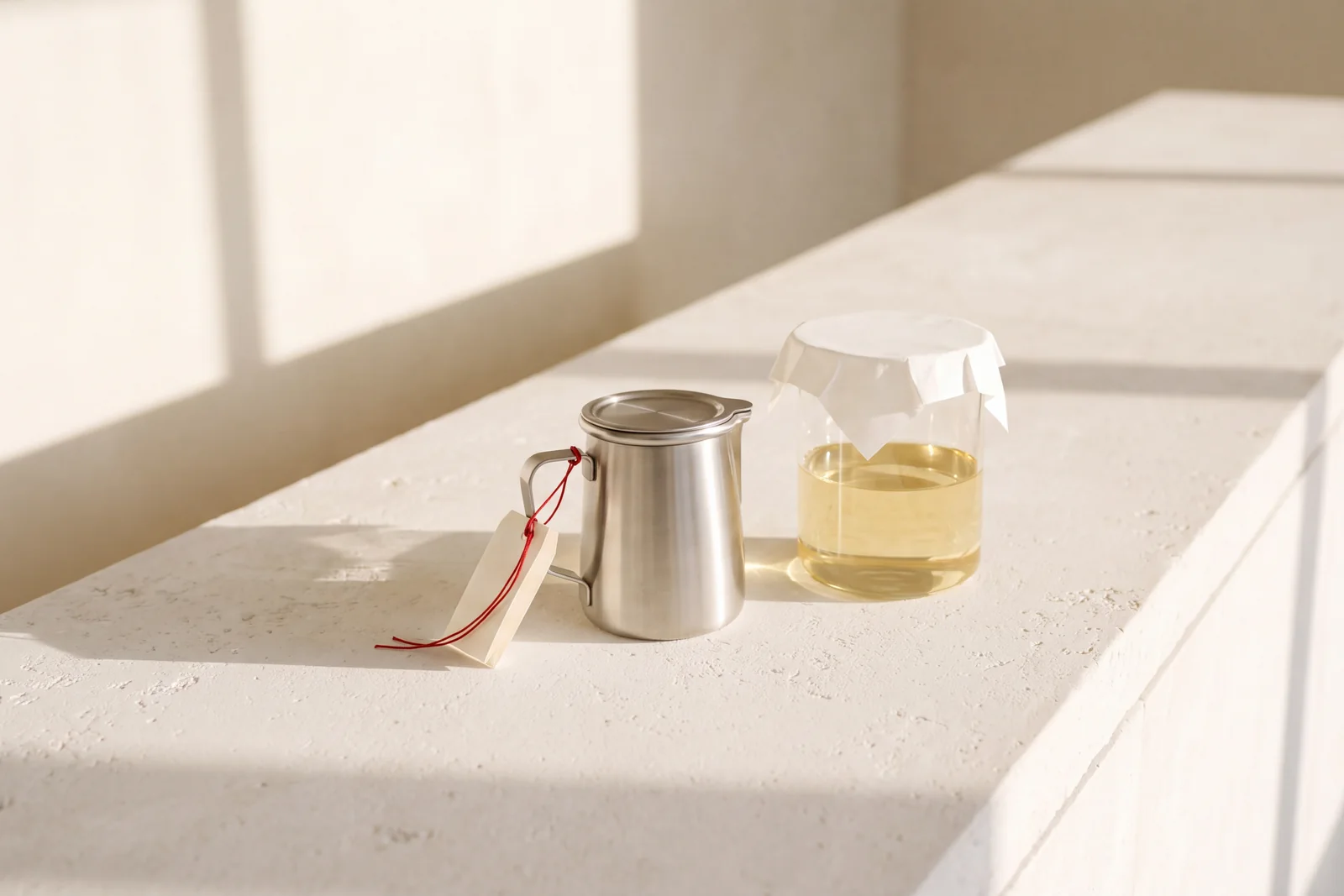
Better to ship late than to ship green. The wait is not a delay. It is part of the formula.
Why it is also a moat
Much of the inexpensive end of the market cannot afford to wait. Capital tied up in resting juice is capital not earning, and the clone economy runs on speed. A house that controls how long its blends rest controls the one thing customers feel but cannot name: consistency. The bottle you buy next year should smell like the bottle you bought this year, and a fixed rest, checked against a reference before filling, is how that is kept.
So when an edition’s page states how long its batch rested, the figure is a production fact rather than a flourish, stated for the same reason as the batch number: it can be checked. Nagori’s pages gain it when there is a first batch to state it from.