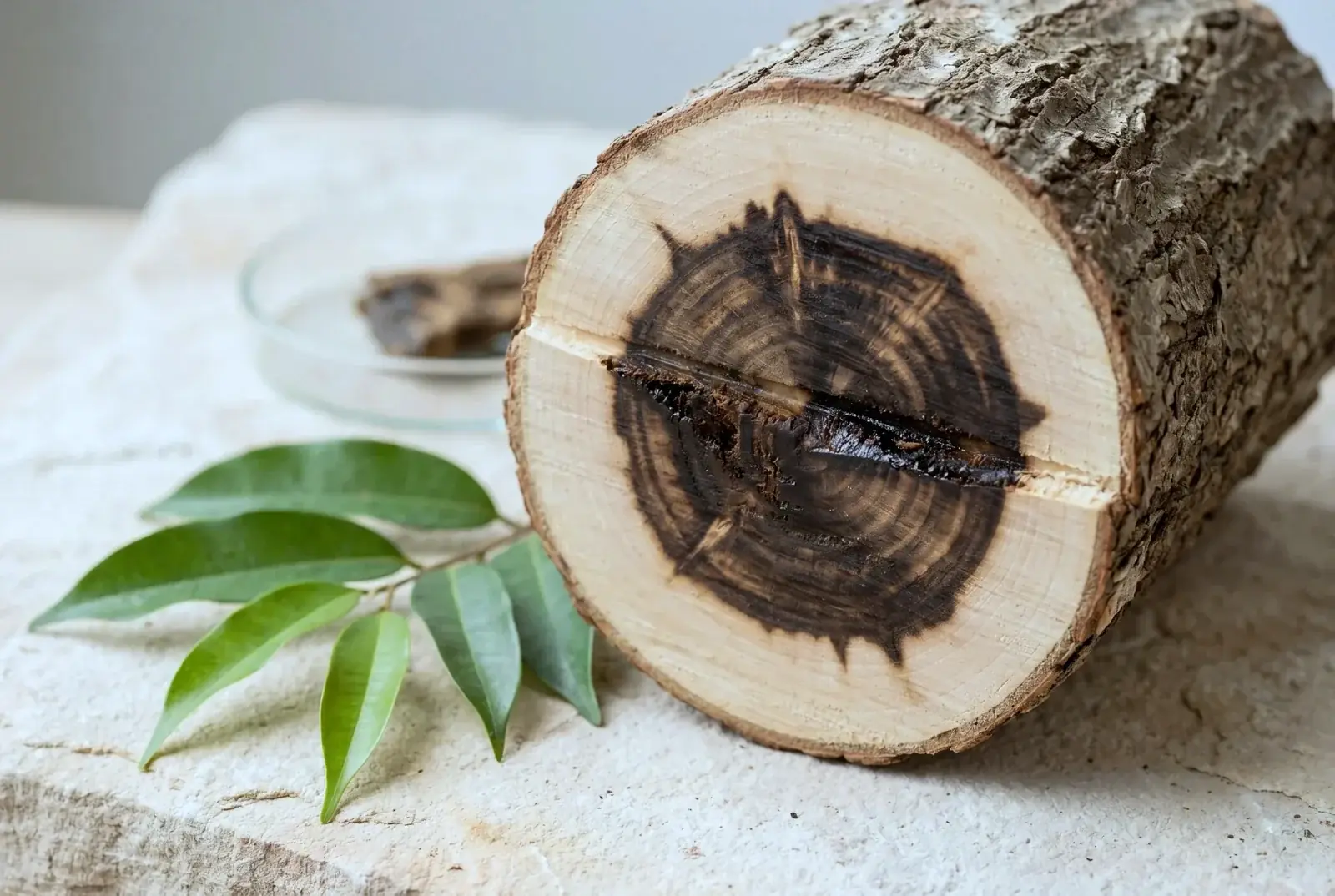
Almost everything sold as sandalwood is not Santalum album, and almost nothing sold as Mysore sandalwood is from Mysore. The reasons are botanical, legal and slow, and they explain the price.
The tree takes decades to become worth cutting
Santalum album is a hemiparasite: it draws part of its water and nutrients from the roots of neighbouring host plants, which means it cannot simply be planted in rows on its own and rushed. The fragrant material is not the timber but the heartwood at the centre of the trunk and the roots, and a young tree has almost none of it.
Useful heartwood takes something in the order of fifteen to thirty years to develop, and the oil content and quality go on improving well past that. A tree cut at twelve years yields little of value. This is an agricultural product with the time signature of a cathedral.
A century of state ownership
For most of the twentieth century the sandalwood tree in Karnataka was state property regardless of whose land it grew on. A farmer with a sandalwood tree in the garden did not own it, could not fell it, and was responsible for it. The intention was conservation; a substantial effect was that nobody had any incentive to plant one, and many quietly removed seedlings rather than inherit the liability.
Combined with heavy illegal felling, the wild population fell far enough that Santalum album is now listed as Vulnerable on the IUCN Red List. The law has since been relaxed to allow private cultivation and sale under permit, and plantations now exist in Karnataka, Tamil Nadu and elsewhere — but a plantation planted after the reform is still, by the arithmetic above, only now approaching its first real harvest.
A material that takes thirty years to make cannot respond to demand. It can only be rationed, substituted, or faked.
What is sold instead
Australian sandalwood, Santalum spicatum, is a genuine sandalwood and a legitimate material, drier and sharper than album, with less of the creamy body. New Caledonian and Hawaiian species have their own profiles. Australian plantations of album itself now supply a large share of the world’s legal oil, and some of it is excellent.
Then there is what is not sandalwood at all. Amyris, sometimes sold as “West Indian sandalwood”, is a different botanical family entirely. Synthetic sandalwood molecules — a family of materials built to imitate the creamy woody effect — are in a great many fragrances that say sandalwood on the box, and are often blended with a trace of the real thing.
How to read a claim
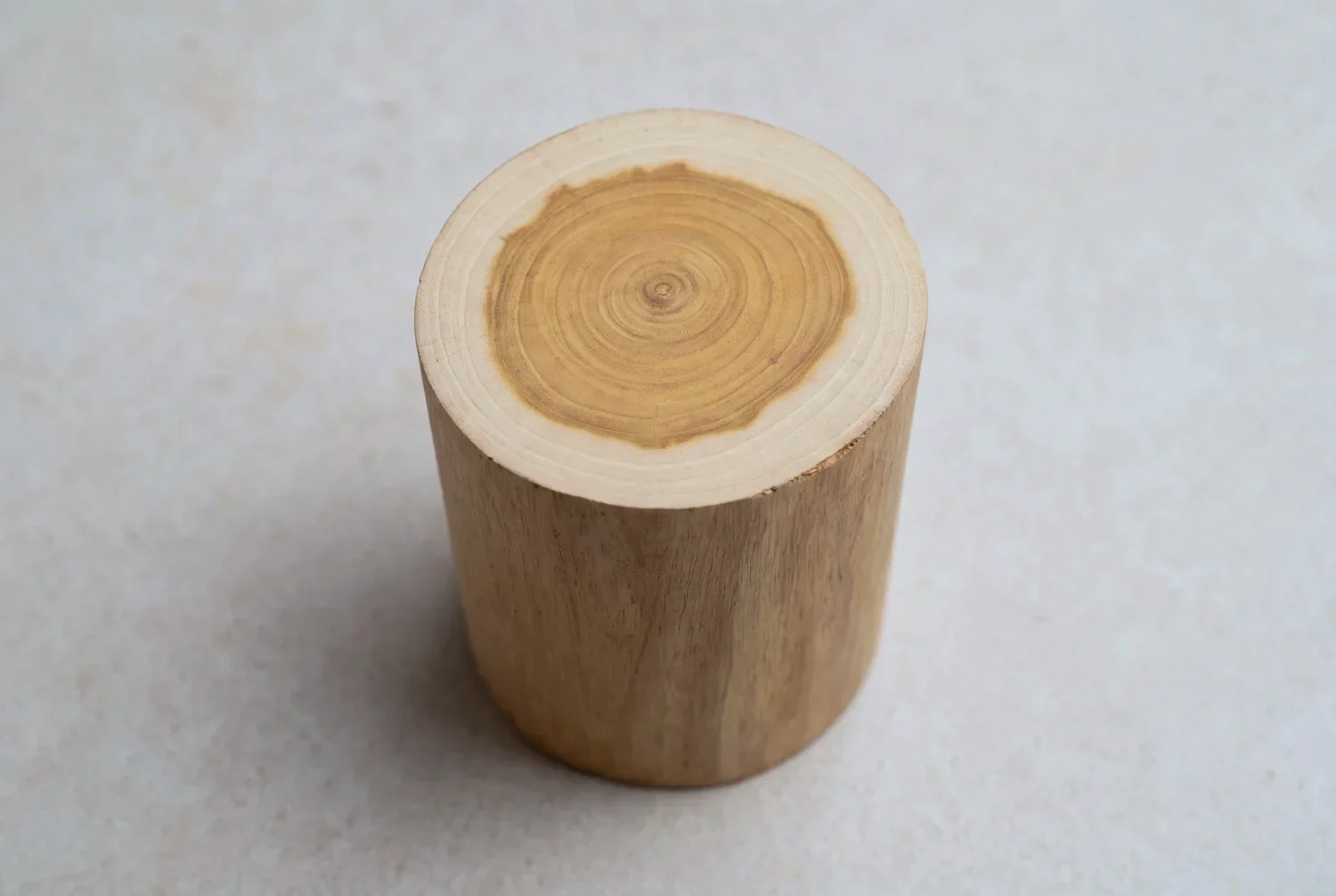
Treat any unqualified “sandalwood” as meaning a synthetic accord until told otherwise; that is usually the truth and it is not a scandal. The claims worth attention name the species and the origin, because those are things a supplier can be held to. Price is the other tell: real aged album oil is among the most expensive materials in perfumery, and a bottle priced as though it were not, is not.
Sandalwood settles three of the five: Somewhere Else, After You and Don’t Leave Yet. Which sandalwood each one uses — the species, and whether it is the oil or a molecule built to imitate it — is stated with its full ingredient list before the first bottle ships, because that is the claim worth holding a house to.