On waste
Made to be refilled.
The most sustainable bottle is the one you already own. Our whole approach starts there — and we'd rather tell you what we haven't fixed than pretend we've fixed everything.
01 · The bottle
Refill,
don't replace
Send back your empty Nagori bottle and we refill it for up to ₹2,600 less than a new one. The heavy glass and the cap are made to last for years of refills — one bottle, many lives. Every refill is one fewer bottle manufactured, boxed and shipped.
02 · The glass
Glass,
not plastic
The bottle is weighted glass with a turned wooden cap — objects worth keeping on a shelf, not hiding in a drawer. No plastic atomiser housings, no throwaway sleeves. When a bottle finally does reach the end of its life, the glass is endlessly recyclable.
03 · The box
Less
around it
One recycled-board carton, printed with soy-based inks. No cellophane, no magnets, no foam inserts, no gilt. The packaging exists to protect the bottle in transit and then to be recycled — not to be photographed and thrown away.
04 · The distance
Made
where it grows
The materials are Indian; so are we. Composing and bottling in India, near where the saffron, sandalwood and oud are grown, means the rawest leg is the shortest. For now everything ships from a single point in New Delhi.
05 · The sourcing
Fair to
the growers
Real naturals mean real farmers. We buy graded saffron from Pampore, mitti from Kannauj's potters, khus from Hathras in Uttar Pradesh — directly where we can, traceably always, at prices that keep the craft alive. A synthetic shortcut would be cheaper. It would also be a different company.
06 · The honest part
What we
haven't solved
Perfume is mostly alcohol, and distilling it carries a footprint we haven't eliminated. Our refill logistics still move bottles back and forth across the country. We're not carbon-neutral, and we won't buy a badge that says we are.
What we can promise is that we'll keep saying where we actually stand — and keep closing the gap, refill by refill, rather than offsetting it away on paper.
Keep the bottle. We'll keep filling it.
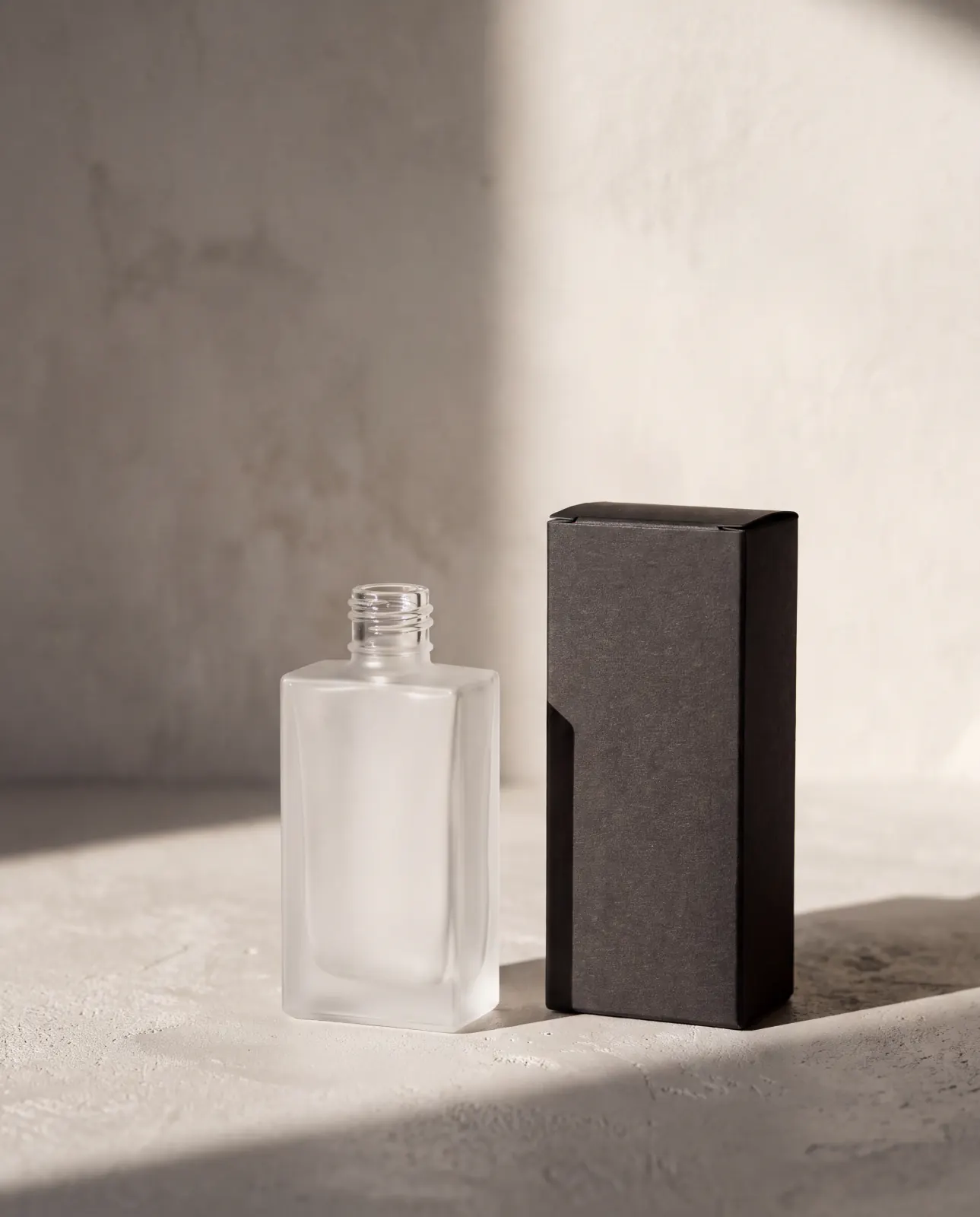
The most sustainable bottle is the one you already own.